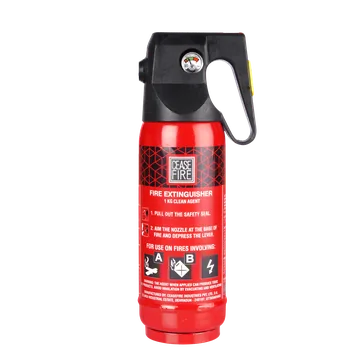
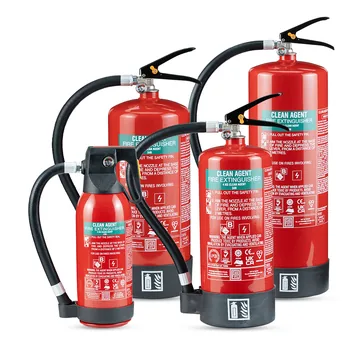
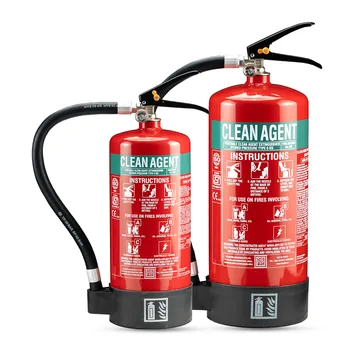
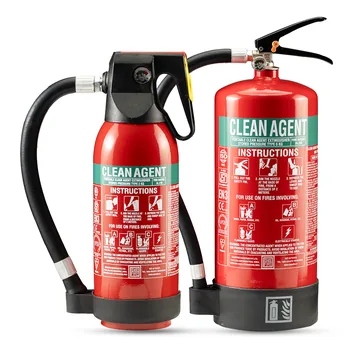
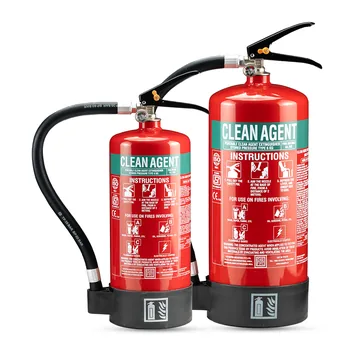
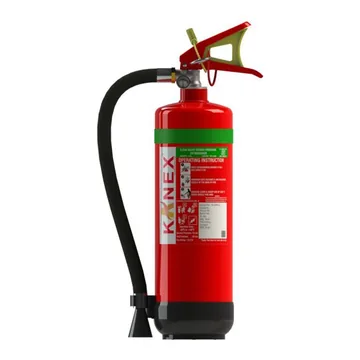
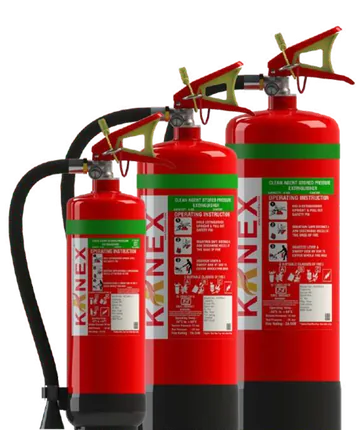
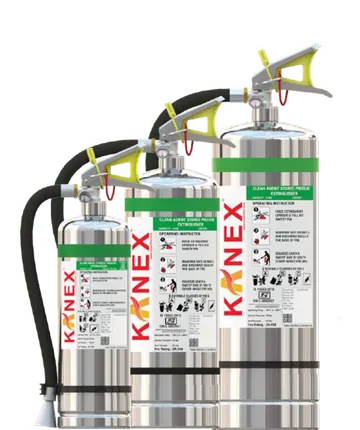
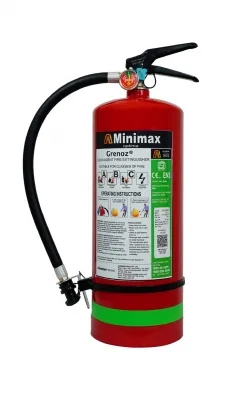
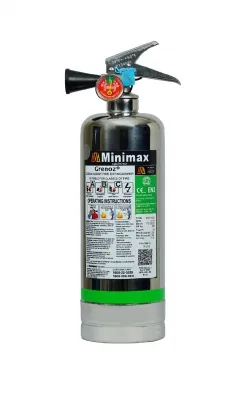
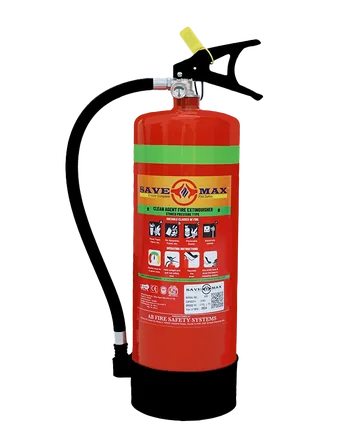
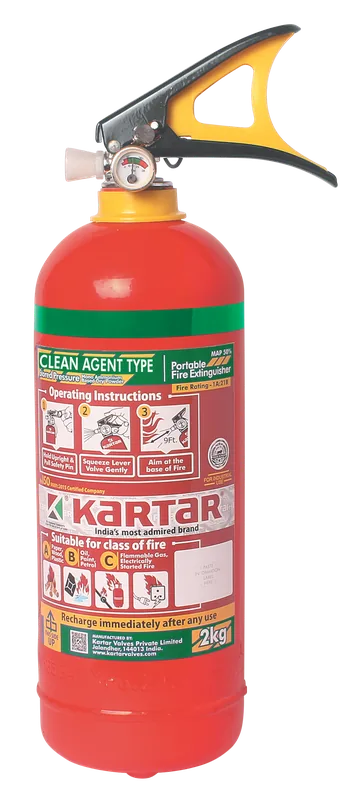
Start with the agent. Many models use FK-5-1-12 fluoroketone (Minimax sells it as Grenoz 1230), from Ceasefire, Kanex, Minimax and Savemax. HFC based units use HFC 236fa (Ceasefire, Kanex RQ series), Chemours FE-36 (Kanex HQ series) or HFC 227ea (Ceasefire). All of them leave no residue, so the choice usually follows the agent named in your tender or site specification. Kartar Valves does not name the agent in its 2 kg unit, so FPS confirms it on enquiry.
Then check the fire rating and fire classes. At 2 kg most units are listed at 1A:21B (written 1A, 21B by Ceasefire), Kanex lists 5A:21B for its FK-5-1-12 units under EN test methods, and the Ceasefire EN approved range lists 21B. The models are listed for Class A, B and electrically started fires, and the fluoroketone units from Ceasefire and Minimax also for Class C.
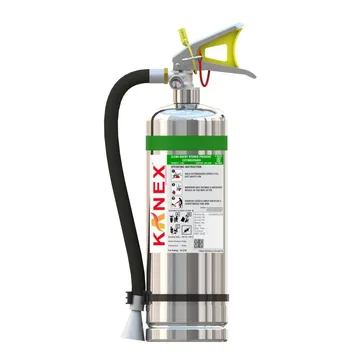
Next pick size and body. Ceasefire offers 500 g and 1 kg thumb trigger units for homes, cars and electronics, and Minimax lists 1 kg to 9 kg. Most portable units come in 2, 4 and 6 kg, with 9 kg also in the Ceasefire EN range. For reception areas, boats and coastal or high salinity sites, stainless steel bodies are offered by Kanex (FE-36 and FK-5-1-12), Minimax (Grenoz) and Savemax.
Finally match approvals to your requirement. Ceasefire BIS models are made to IS 15683, Kanex units are BIS approved and ISI marked, with IS 15683:2006 listed on the HFC-236fa and FE-36 models, Minimax units are ISI marked and Savemax units BIS/ISI marked. The Ceasefire EN range is built to EN 3 with LPCB, BSI Kitemark, PED and CE marks, and Kanex lists UL listed gas on its FE-36 models and its FK-5-1-12 RQ model.