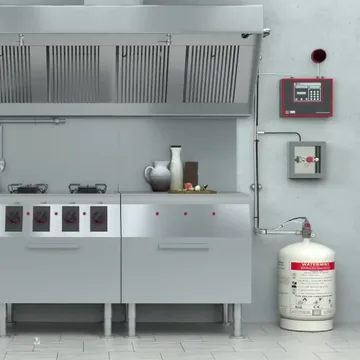
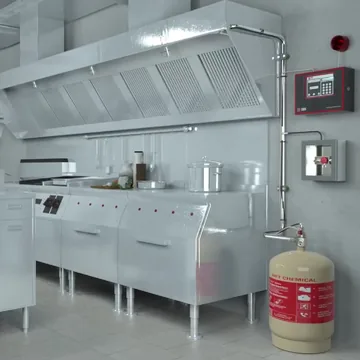
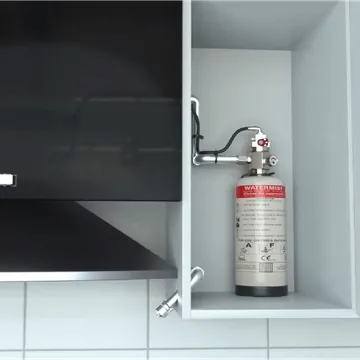
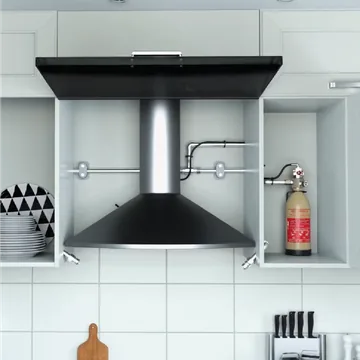
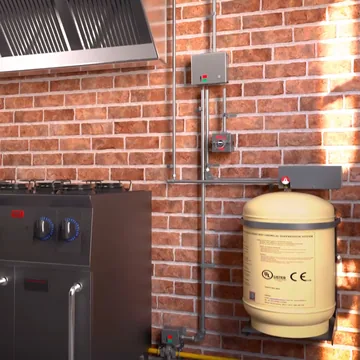
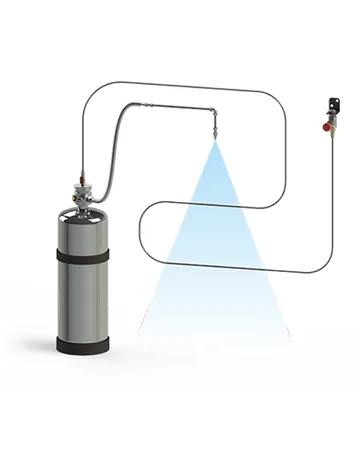
Start with the kitchen. A commercial kitchen needs protection along the full hood with its duct and plenum, while a home kitchen needs a compact system with the cylinder, nozzles and detector hidden in the cabinets. Ceasefire offers commercial systems LPCB certified under LPS 1223 and residential systems that are BSI tested, and every Ceasefire system here is listed for Class A, B and F (cooking oil) fires.
Then choose the agent. Wet chemical forms a foam blanket over burning oil and cools it; in the Ceasefire commercial system the agent is 90% water and 10% foam chemical and 99% biodegradable. Watermist breaks water into fine droplets, under 70 microns in the Ceasefire commercial system, that cool the area and turn to steam to keep oxygen out, with minimal damage to equipment and food in the residential version.
For larger engineered layouts, the Ceasefire Ultra-X system is certified to UL 300 and adheres to NFPA 96/17A, with containers from 14 ltr to 64 ltr, a 100% biodegradable wetting agent, electrical, mechanical or hybrid detection, and group, overlapping or spot protection. For a pre-engineered hood system, Kanex uses a 9 litre stainless steel cylinder at 16 bar working pressure with a sensor tube that bursts at 175 degrees C, and carries CE and LPCB marks.
Apart from Ultra-X, these systems detect with a pneumatic heat sensing tube along the hood that ruptures at a set temperature, with manual actuation as back up. FPS surveys the hood, duct and appliance line, then supplies, installs and maintains the system in Bhopal and across Madhya Pradesh.