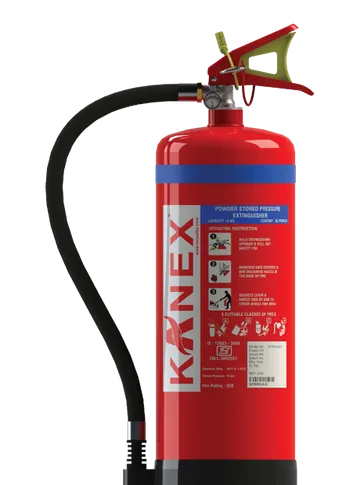
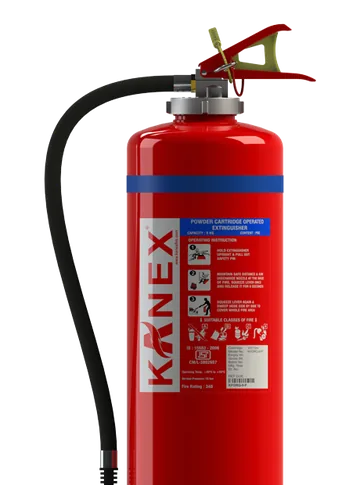
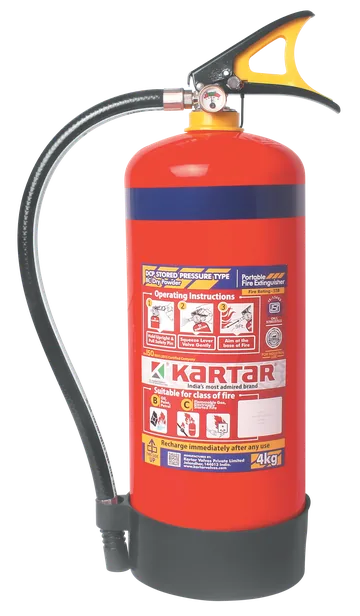
First confirm that BC powder fits the risk. It is meant for flammable liquids and gases, such as fuel points, tank areas, gas handling and chemical process areas, and is not listed for Class A fires of wood, paper or cloth, where an ABC unit is the usual choice. Kanex offers two powders, siliconized sodium bicarbonate (SBC) and siliconized potassium bicarbonate (PBC), both to IS 4308; Minimax uses sodium bicarbonate, and Savemax and Kartar Valves list BC dry chemical powder.
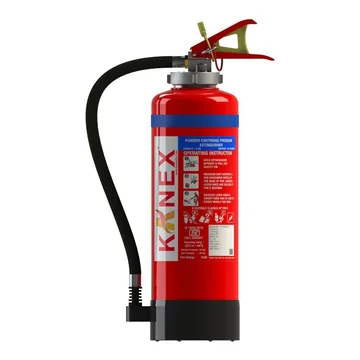
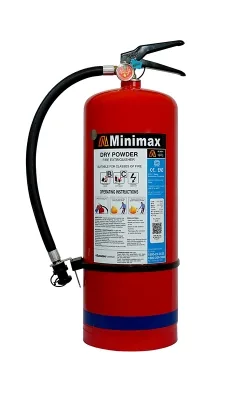
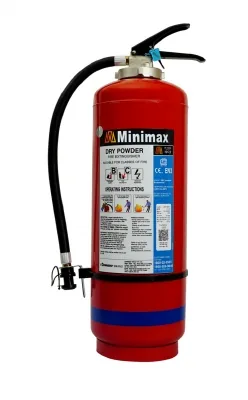
Next choose stored pressure or cartridge operation. Stored pressure units hold nitrogen in the cylinder with the powder and are offered by Kanex in 4, 6 and 9 kg, with a gauge testing system to check the charge, and by Minimax from 1 kg to 9 kg. Cartridge operated units keep the propellant in a separate CO2 cartridge that pressurises the body only when used, which makes refilling quick and suits industrial and outdoor sites; Kanex (CO2 cartridge to IS: 4947) and Minimax list them in 4, 6 and 9 kg.
Then compare the listed fire rating, not just the weight, because it changes with size, operation and test method. Examples from the data: 34B on the Minimax 1 kg stored pressure unit, 89B on the Minimax 4 kg cartridge unit, and 183B on the Kanex 4 kg cartridge units with about 15 seconds discharge and 4 m throw. Kartar Valves lists 4, 6 and 9 kg capacities without published ratings, so FPS confirms them on enquiry.
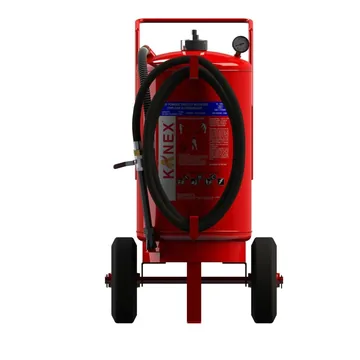
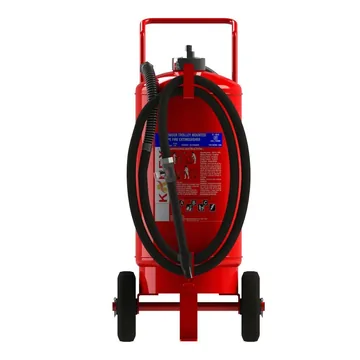
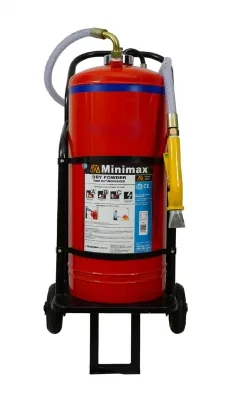
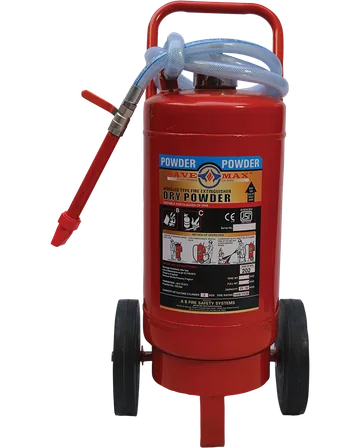
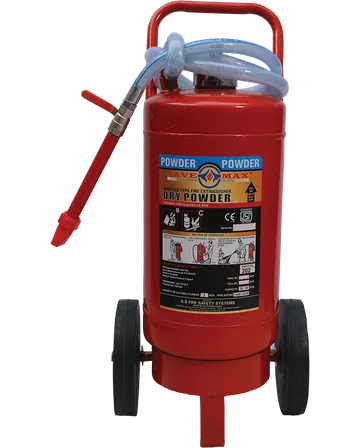
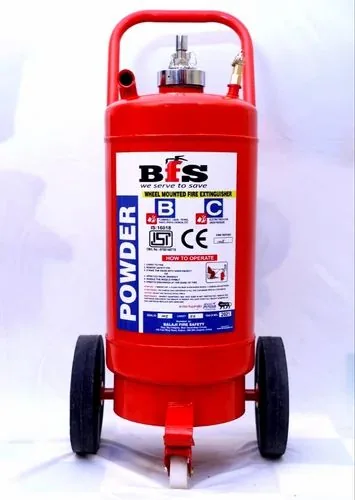
For fuel points, tank farms and large sheds, choose a trolley unit of 25, 50 or 75 kg. Kanex and Minimax trolley units are rated 233B, with Kanex listing about 32 seconds discharge and 6 m throw on the 25 kg size and conformity to IS 16018:2012. Savemax offers a 25 Kg gas cartridge trolley whose mechanism keeps working even if the body loses pressure, and a CO2 stored pressure trolley in 25, 50 and 75 Kg that needs no separate cartridge. Balaji Fire Safety lists a 50 kg stored pressure trolley with a galvanised, polished finish and an average discharge time of 25 sec; its listing also names CO2 types, so FPS confirms the agent with Balaji before supply.