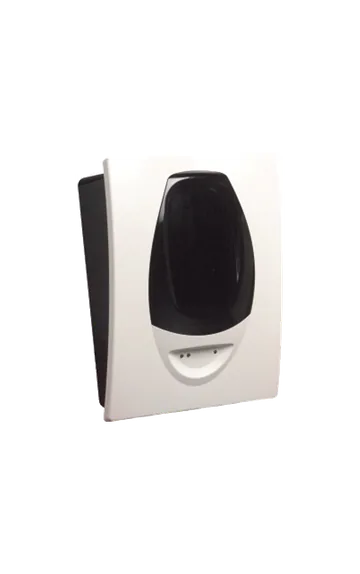
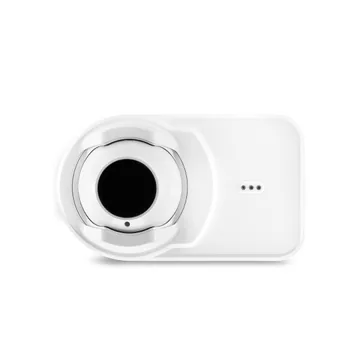
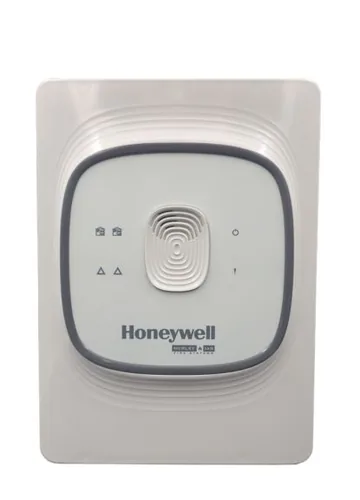
A beam smoke detector protects a large open space with one line of infra red light instead of many point detectors. The Morley beams are reflector type: the transmitter and receiver sit in one unit at one end, and a reflector at the far end returns the beam. Smoke in the path blocks part of the light (obscuration) and the detector signals an alarm. Both Morley beams connect straight to the addressable loop and list EN 54-12, the European standard for line smoke detectors that use an optical beam.
The MI-LPB2-S3I covers 10 to 70 m with the standard 200 x 230 mm reflector, or 70 to 100 m with the BEAM-LRK long range reflector kit, and is aligned with a gunsight targeting device. The MI-OSI-RIE uses IR video imaging with a combined transmitter and receiver, covers 5 to 100 m with a wide 12 degree field of view, shows alignment with directional arrows and allows an electronic simulated smoke test from ground level. It works with panels using the Advanced Protocol or CLIP mode.
An aspirating smoke detector draws air samples from the protected area to a sensitive detector, which suits electrical rooms, data centres, machine rooms, voids and ceiling spaces. The Addressable FAAST FLEX comes in a 1-channel version (up to 1600 m2) and a 2-channel version (up to 2000 m2), uses dual optical path blue-LED detection and ultrasonic airflow measurement, and lists EN 54-20 Class A, B and C.
FPS looks at the space, the ceiling height and the risk, then supplies, installs, aligns, commissions and maintains Morley beam and aspirating detectors in Bhopal and across Madhya Pradesh.