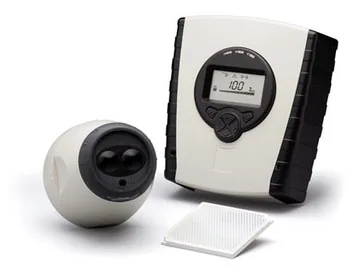
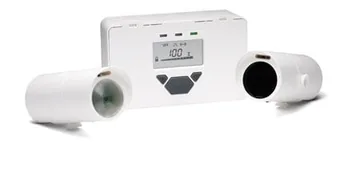
A beam detector works on the light obscuration principle: a beam of light crosses the protected space and the detector signals an alarm when smoke blocks enough of it. One beam can cover a long, open span, which is why beams suit warehouses, halls and high ceilings where point detectors would be many and hard to reach. In a reflective beam the head sends the light to a prism at the far end and reads it on its return; an end to end beam has its two ends on opposite sides of the space. EN 54-12 is the European standard for this type of line smoke detector.
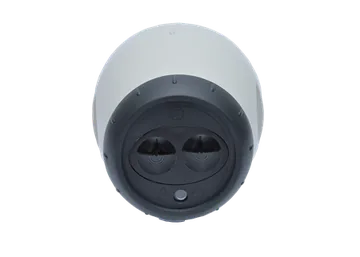
Next, match the beam to the fire panel. The Intelligent Reflective Beam Detector sits on an addressable loop and works with XP95, Discovery and CoreProtocol, with selectable alarm and pre-alarm thresholds. Its low level controller can run two auto-aligning heads, and an add-on head is available. For conventional panels, choose the Conventional Reflective Beam Detector, the Conventional End to End Beam Detector with separate fire and fault relays, or the Series 65 Fireray One and Fireray Hub systems.
Then check distance and conditions. Each auto-aligning reflective head is set between 8 m and 100 m, while the End to End detector covers 5 to 120 metres. The reflective and end to end models are designed to IP54 and the Fireray One to IP55, and all listed operating ranges run up to 55°C. Auto-aligning heads and laser assisted alignment make setting up quicker, and several models are built for one person installation. FPS installs, aligns, tests and maintains Apollo beam detectors in Bhopal and across Madhya Pradesh.