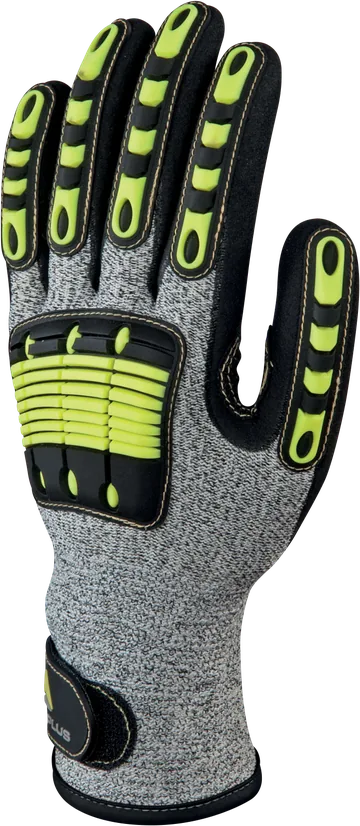
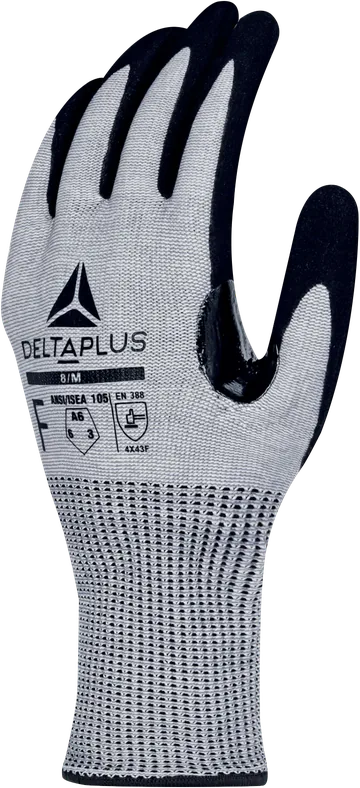
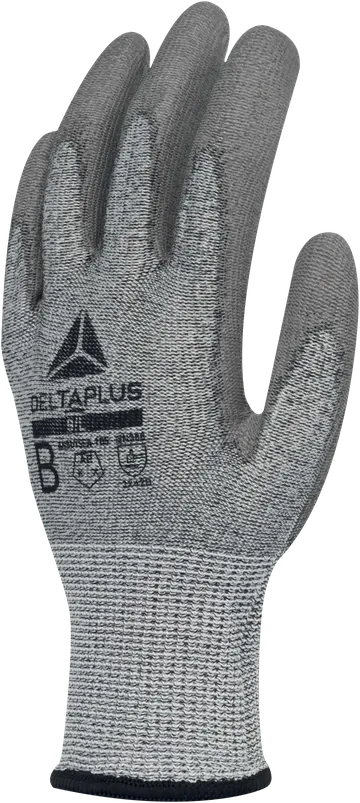
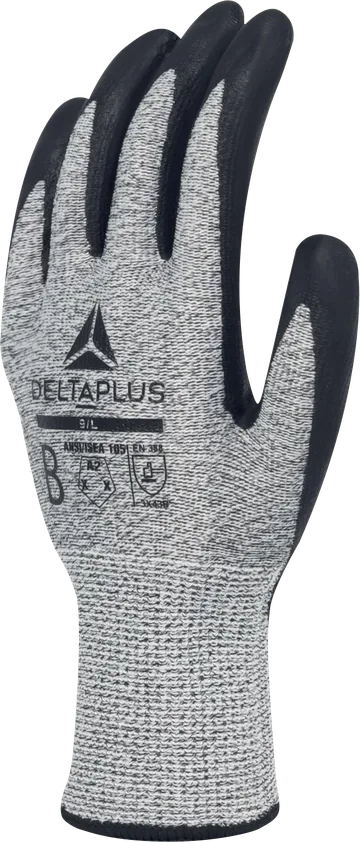
Read the EN 388 code. Its four digits are abrasion (0 to 4), the coupe cut test (1 to 5, or X when it does not apply), tear (0 to 4) and puncture (0 to 4). The letter after them, A to F, is the TDM cut test, the cut result to compare for high performance fibres, and a P at the end means the glove passed the impact test. The US ANSI/ISEA 105 cut scale runs from A1 upwards; the Delta Plus gloves here range from A2 to A6.
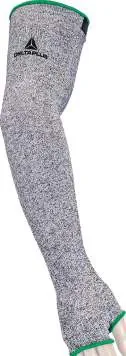
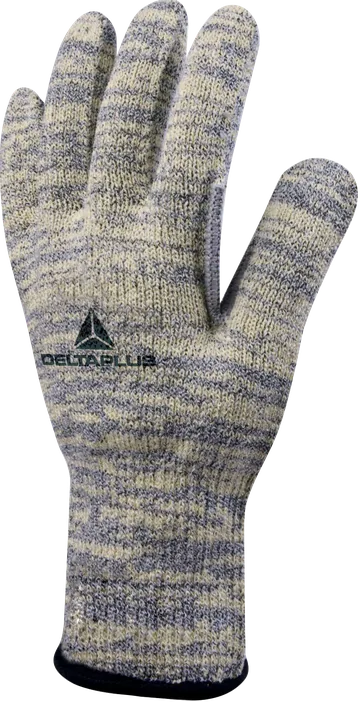
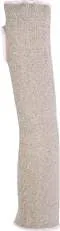
Match the cut level to the job, following Delta Plus's own grouping: level B (VENICUTB04, VENICUTB03) for slightly sharp parts, level C (VENICUTC05 and the VENICUTCM1 sleeve) and level D (VENICUTD04, VENICUTD02, VENICUTDX0, VENICUTD08, EOS NOCUT VV910 and the ECONOCUTDM1 sleeve) for long-lasting cut work, and level F (VENICUT F XTREM CUT) for intense cut work.
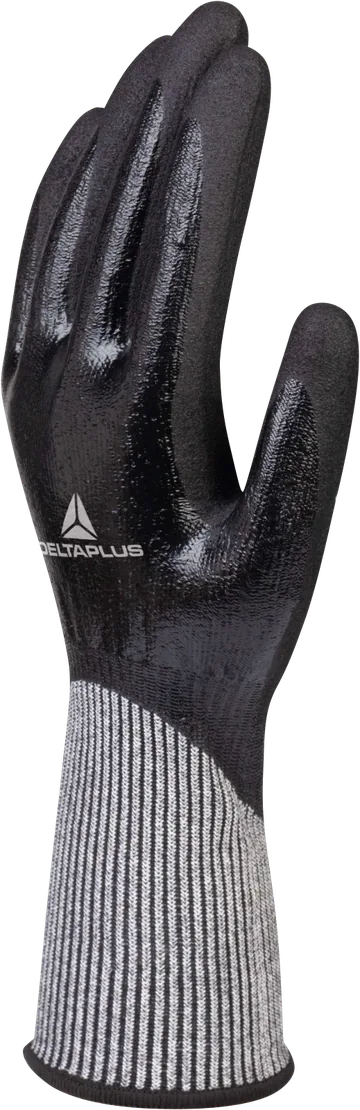
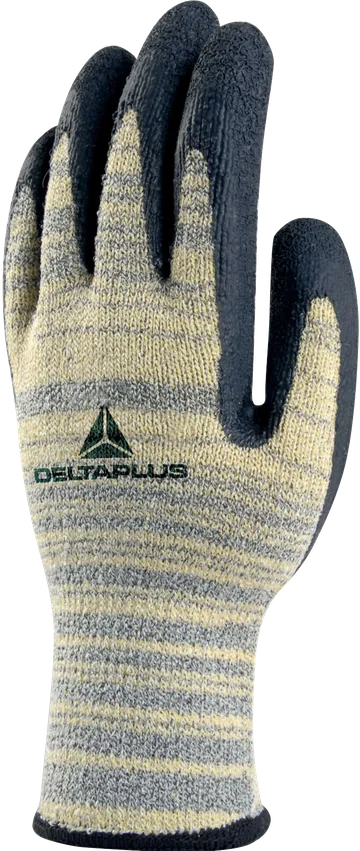
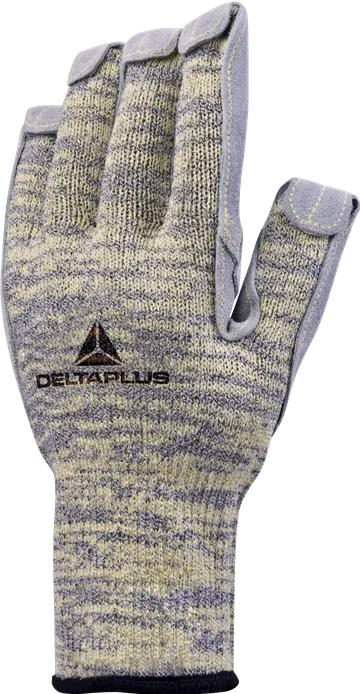
Then the coating. Nitrile, and double nitrile in particular, suits oily work; polyurethane suits dry handling; latex gives a rough grip; split leather adds abrasion resistance for heavy work. If hot parts are handled, the HEATnocut models carry EN 407 contact heat level 1 (100°C for 15 seconds) or level 2 (250°C for 15 seconds). Sleeves of 45 cm or 55 cm protect the forearm. Prices are on request: call or WhatsApp +91 92440 89060.