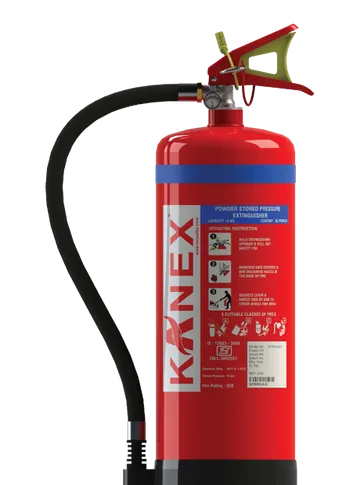
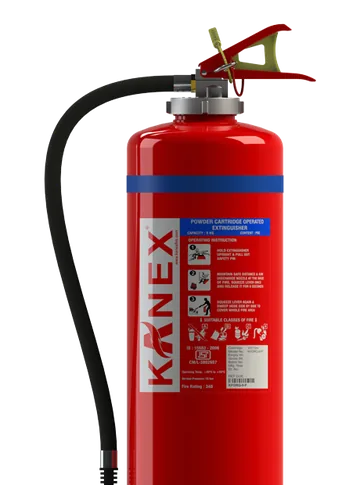
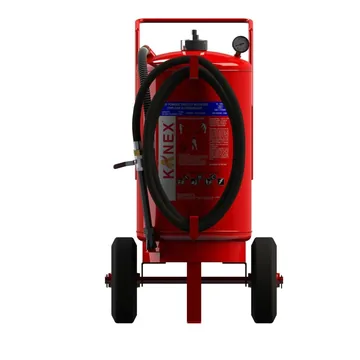
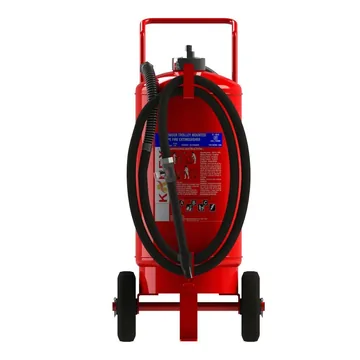
First decide the fire class you are protecting. BC powder handles Class B (flammable liquids such as petrol, diesel, oil, solvents), Class C (pressurised gases) and fires involving live electrical equipment. If you also need protection for wood, paper, cloth and other solid materials, choose an ABC (MAP based) extinguisher instead, or place both.
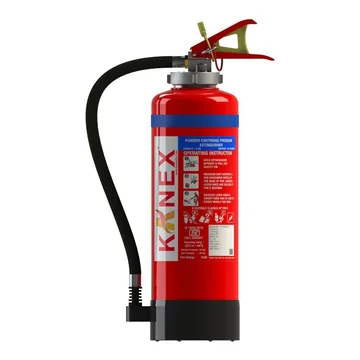
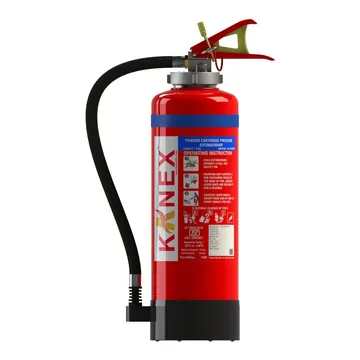
Next pick the operating type. In a stored pressure extinguisher the powder and the nitrogen propellant sit inside the same cylinder, so a pressure gauge shows readiness and the unit is simple to check. In a cartridge operated extinguisher the propellant is held in a separate CO2 cartridge that is pierced when you operate the unit, which suits dusty industrial use and gives a controllable discharge. The Kanex cartridge portables here are rated 183B with about 4 m throw, while the stored pressure portables are rated 21B with about 3 m throw. A rating like 183B indicates the size of a standard flammable liquid test fire the extinguisher can put out; a higher number means a larger test fire.
Then choose capacity by risk size and reach. 4, 6 and 9 kg portables suit vehicles, panels and small areas. The 25, 50 and 75 kg trolley mounted cartridge units give about 32 seconds discharge and roughly 6 m throw, which suits tank farms, fuel points and large sheds. SBC (sodium bicarbonate) powder is the economical choice for Class B and C cover; PBC (potassium bicarbonate) is the alternative powder for the same classes.
Tell us the location count and mounting details and we will work out quantities, brackets, signage and a refill schedule. FPS supplies, installs, refills and maintains these units in Bhopal and across Madhya Pradesh; prices are on request.