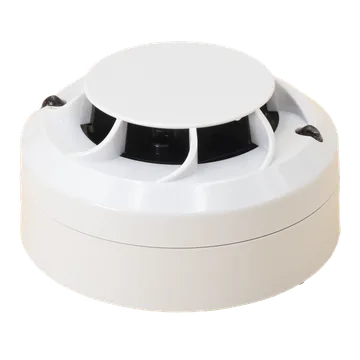
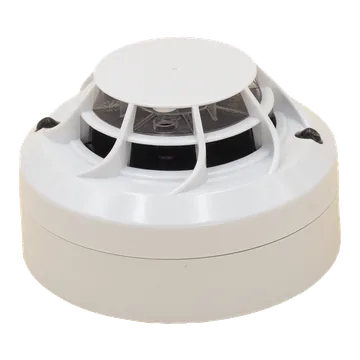
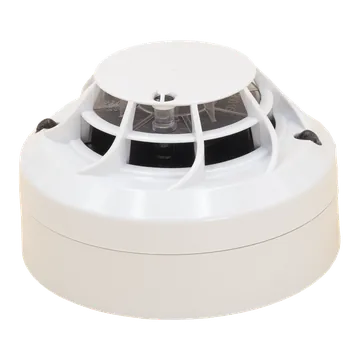
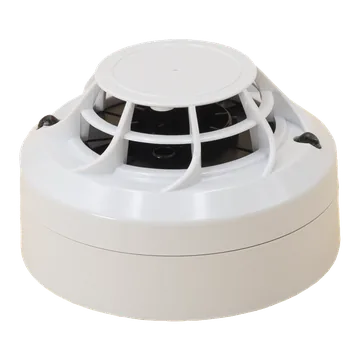
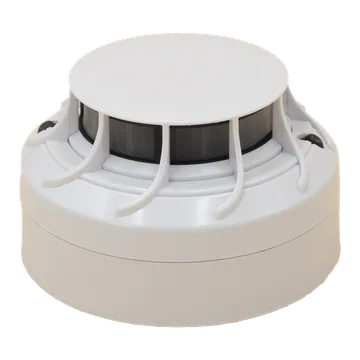
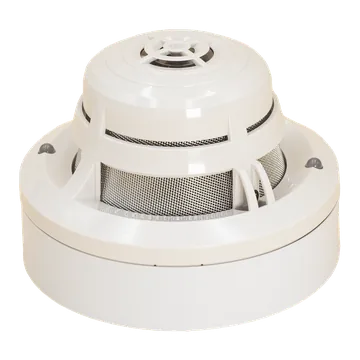
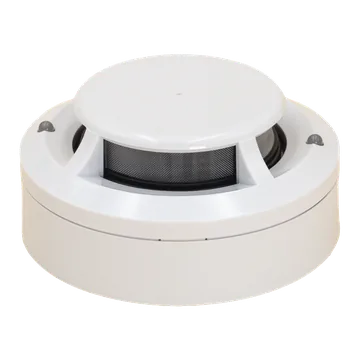
In an addressable system every detector has its own address on the loop, so the panel shows exactly which detector is in alarm. System Sensor Series 200 Advanced detectors use the digital Advanced Protocol, which the maker says allows more devices on the loop with greater control and device management, and the smoke, photo-thermal, multi-criteria and heat models are fully backward compatible mechanically and electrically. Most have a tri-colour LED visible through 360°, rotary decade address switches, and a 15 to 32Vdc operating range.
Match the sensing type to the risk. The 22051E photoelectric smoke detector works on the light scattering principle and suits general areas. The 22051TE photo-thermal detector adds a heat sensor for better false alarm immunity and can be programmed to work in heat only mode during busy daytime hours. The 22051TLE adds infrared sensing as well, and System Sensor presents it as the environmentally friendly alternative to ionisation detectors. The 52051 heat detectors cover 58°C (Class A1S) to 78°C (Class BS) fixed temperature and rate of rise (Class A1R), and any model can be set in software to the mode needed.
For special risks, the HS200 (72051EI) is a high sensitivity smoke sensor that System Sensor rates 100 times more sensitive than standard smoke sensors, for the earliest warning. The 2251CTLE COPTIR combines CO, photoelectric smoke, heat and infrared sensing with 6 alarm sensitivity settings. The 22051EISE is an intrinsically safe smoke sensor approved by BASEEFA to EEx ia IIC T5/T4 for Zones 0, 1 and 2; it must be used with the IST200 module and a Y72221-L4 galvanic isolator.
The photoelectric, photo-thermal, multi-criteria and heat detectors come with or without a built-in single pole short circuit isolator: the version ending in I (for example 22051EI) has the isolator. FPS supplies, installs, programs and maintains System Sensor addressable detectors in Bhopal and across Madhya Pradesh.