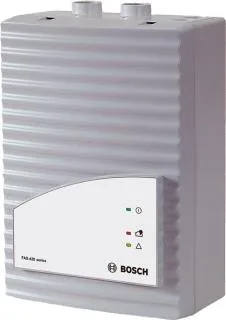
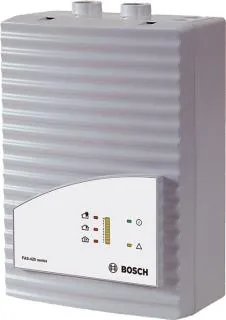
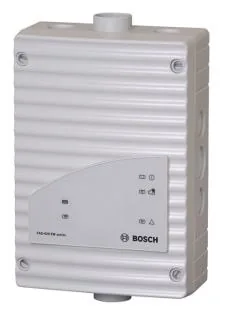
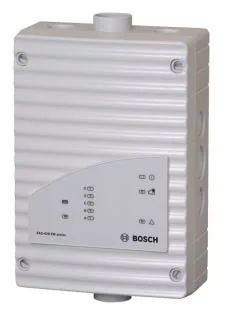
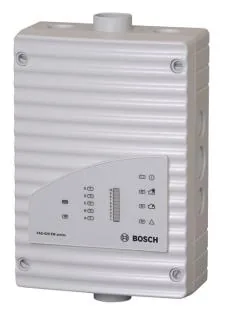
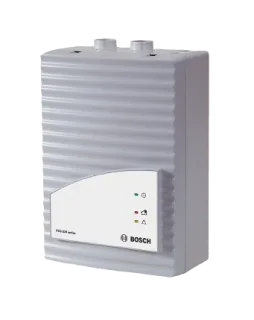
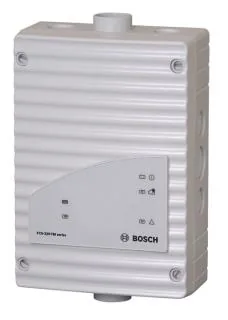
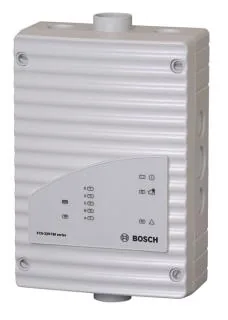
An aspirating smoke detector draws air through a network of sampling pipes with small holes and tests it for smoke in a central unit, so it can watch a room, a piece of equipment or an air-conditioning duct from one place. Bosch's units monitor the airflow down to single holes to spot blocked or broken pipes, and use suction-reducing film sheets to simplify pipe planning. First choose the system: FAS-420 detectors connect directly to Bosch LSN improved loops, with two isolators, and FCS-320 detectors work with conventional panels.
Next choose the format. The TP and TT models take one pipe system (TP1, TT1) or two (TP2, TT2), and need detector modules ordered separately, with 0.5, 0.1 or 0.015 %/m response sensitivity; a two pipe unit takes two modules, either to double the area or for two-detector dependency. The TT models add a differentiated alarm and smoke level display. The compact TM models take one pipe system and need the FAS-420-TM-HB housing base, ordered separately. The -R versions add room identification, pinpointing the fire among up to five distinct areas, and the FAS-420-TM-RVB adds a 10-segment smoke level bar graph.
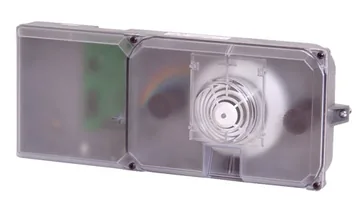
For smoke in ventilation ducts, the FAD-420-HS-EN is an air sampling housing with base for the FAD-425-O-R detector, which is ordered in addition. It works at air speeds from 1 m/s to 20 m/s and can take an optional relay board to switch fans, door controls or external displays. FPS supplies, installs and maintains Bosch aspirating and duct detection in Bhopal and across Madhya Pradesh; confirm the exact unit, detector modules and accessories with FPS.