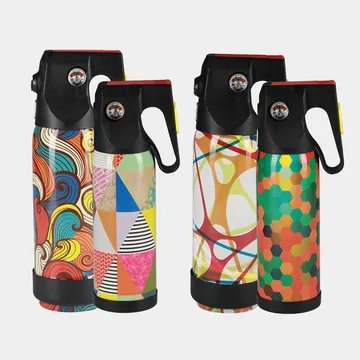
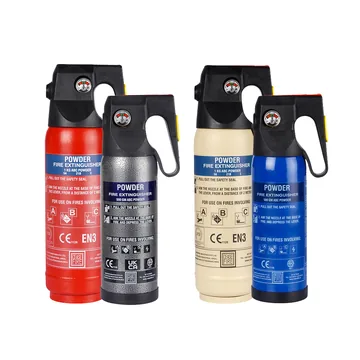
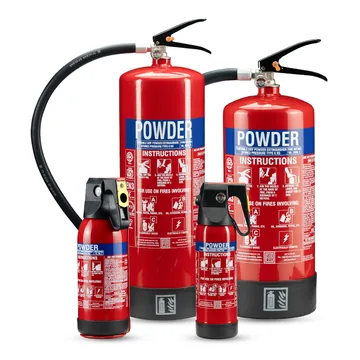
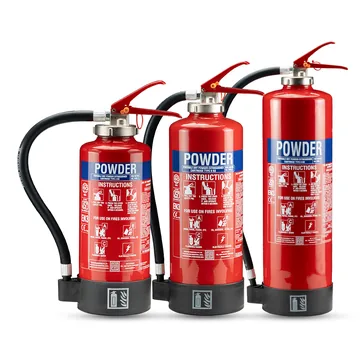
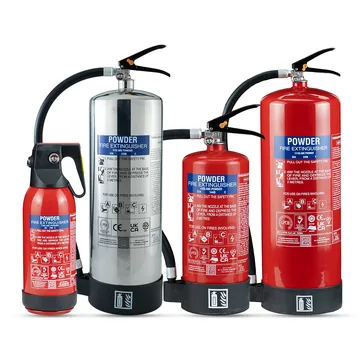
First pick the powder grade. MAP stands for mono ammonium phosphate, and the number is its percentage in the powder: MAP 90 has 90% and MAP 50 has 50%. Both grades are used on Class A (solids such as wood, paper and fabric), Class B (flammable liquids) and Class C (gases) fires and on electrically started fires, and several Ceasefire lines are offered in both, so ask FPS which grade your Fire NOC calls for.
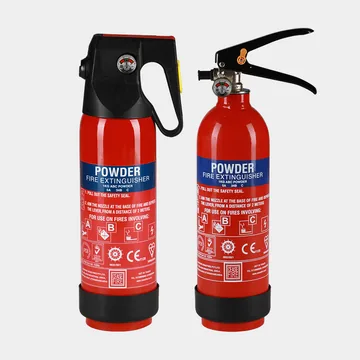
Next choose how the unit is pressurised. Stored pressure units keep the powder under pressure in the cylinder, with a gauge that shows the charge at a glance, which suits offices, corridors and homes. Cartridge type (spot pressure) units build pressure only when operated and can be refilled on site straight away, which suits factories and busy industrial areas.
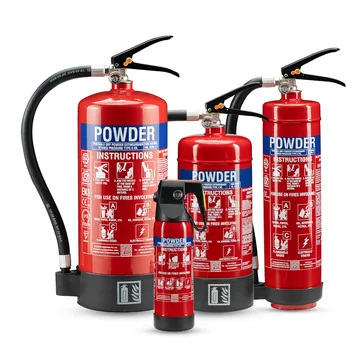
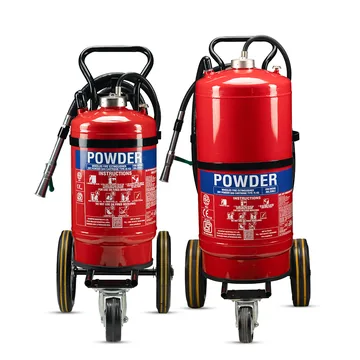
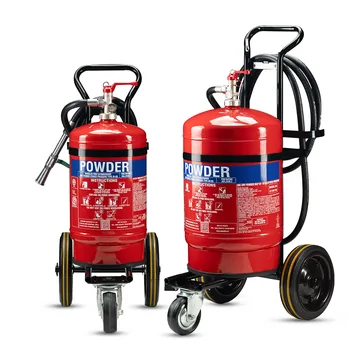
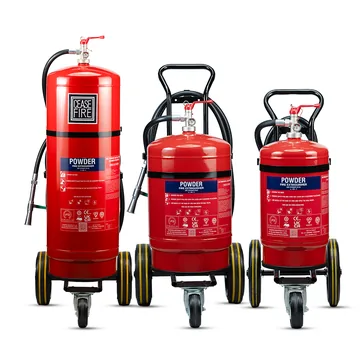
Then size it to the risk. Home and car units come in 500 g and 1 kg, portables run from 1 kg to 12 kg, and wheeled units of 25 kg to 100 kg cover large open risks such as fuel stores, yards and plants; the IS 16018 wheeled models are rated 20A, 233B with a throw above 6 m. A rating like 20A, 233B gives the size of the wood (A) and flammable liquid (B) test fires the unit put out. For projects that follow European specifications, choose the EN approved lines with LPCB, BSI Kitemark, PED and MED marks. FPS supplies, installs, refills and services every model here in Bhopal and across Madhya Pradesh.